
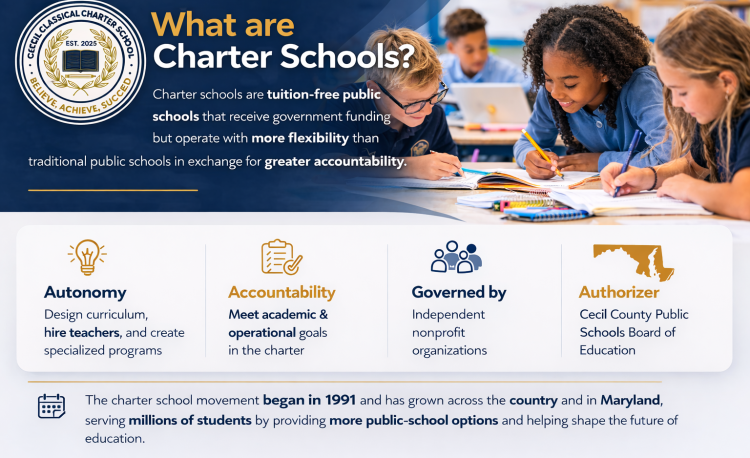
Charter schools are tuition-free public schools that receive government funding but operate with more flexibility than traditional public schools in exchange for greater accountability. Charter schools are governed by independent “charters,” that outline the school’s mission, performance goals, and operational structure.
Charter schools are typically run by a nonprofit organization that could consist of a group of educators or community members. These schools have the freedom to design their own curriculum; hire teachers aligned to their vision and mission; and implement teaching methods and specialized programs to create a learning environment that meets the needs of the students they serve.
What makes charter schools unique is the balance of autonomy and accountability. In exchange for their autonomy, charter schools are held accountable for meeting not only the operational goals of the charter but also the academic outcomes defined in the charter. If a charter school fails to meet the goals and standards required by the charter, the authorizer and State agencies, the school risks closure. The authorizer in the case of Cecil Classical Charter School is Cecil County Public Schools Board of Education.
The first charter law was passed in 1991, and since then the movement has grown across the country and within the State of Maryland. Today, charter schools serve millions of students in all types of communities, allowing parents more public-school options that are helping shape the future of education.